

Three ways your brain lies to you about risk
Chances are you're falling into the traps of familiarity, overestimating your control and looking for evidence to confirm the way you already think. All three are bad news.

Most people think they understand risk.
Actually, I’ll go a step further:
Most people I’ve talked to about risk aren’t competent at assessing or reducing it. That includes plenty of smart, financially literate people who just haven’t reason to think systematically about it.
Yet.
I say this with love, having spent a significant chunk of my engineering career living and breathing risk assessment: HAZOPs, WRACs, PHAs, RCAs, FMEAs, Bow Tie diagrams… I’ve been a trained facilitator across more risk methodologies than I can rattle off without checking my CV.
Misunderstanding risk is bad news for all aspects of your life - finances included. Getting it right is important if you want to get future rich.
So, we’re going to dive deeper into risk, starting with a few of the choicest ways your brain deceives you about it.
When I say your brain is lying to you, I’m not kidding. Your wiring will sneakily undermine your best efforts to prevent calamity. Here’s three traps your brain sets for you when you’re trying to manage risk:
Trap 1: Familiarity breeds contempt
…and I’m not talking about taking a loved one for granted.
You are exposed to things that can harm you every day.
The mistake most people make is treating all of those risks as roughly equivalent, like a vague background hum of ‘stuff that could go wrong.’
But not all risks are created equal.
Take one of the most dangerous things most of us will ever do: getting in a car.
The potential harm is acute and severe, i.e. you could crash.
The potential consequences of a crash are immediate, often irreversible, and include death.
Yet you probably get in a car dozens of times a week and barely think about it as a risk because the probability of harm feels low. You’ve operated or sat in a moving vehicle thousands of times and nothing happened. Or, if it did happen, it was minor. The biggest inconvenience was probably repairing the vehicle rather than yourself.
That feeling of familiarity is a trap.
It leads you conclude driving is relatively safe when it’s not.
We can categorically say it’s the one of the most dangerous activities you do daily because we have the numbers to back it up. Your chances of dying in a car accident are around one in 20,800 as of March 2026 (based on 4.8 deaths per 100,000 people reported on the government’s Road Safety Data Hub). And that’s just dying - the potential for life-changing injury is there too, and it’s multiples of the rate of death.
The risk of getting in a car feels low because you face it every day, often many times a day, and it’s everywhere. You probably don’t know a lot of people who refuse to get in a car on the grounds of car crash risk. I certainly get in my car willingly.
We downgrade risk potential because it feels safe, based on our past experience.
And there’s another factor at play in your mental model for risk:
Trap 2: Your sense of control
Because you’re in control of the vehicle, you’ll tend to underestimate the likelihood of something going wrong.
In other words, you’ll trust yourself to avoid the risk.
Which is why people will stay out the ocean to avoid death-by-shark-attack (around a one-in-eight-million chance in Australia) but think nothing of getting in a car (around 384 times more likely to kill you than a shark).
Why? They’re not driving the shark.
Inside everyone’s brain is a little voice saying ‘But it won’t happen to me. I’m a good driver. I’ve got great reflexes. I’ll see the crash coming and avoid it, or I’ll stamp on the brakes like I learned in that defensive driving course.’
And look, you may be right. But on the odds alone, we can say you’re probably overestimating how much you can control the situation. The cemeteries are full of people who thought it’d never happen to them.
Sadly, you are not the best assessor of risk to yourself, especially where you feel you have influence over the outcome.
Of course, it doesn’t help that stats are tricky little suckers, and in today’s online world, you can find a stat or opinion to support any view you care to choose.
Which leads me to…
Trap 3: Confirmation bias
Apparently we’re in a post-truth era, but even way back in the early 1900s we knew the risks with stats:
“There are three kinds of lies: lies, damned lies, and statistics.”
- Mark Twain
You can twist a stat any number of ways to make it fit your preferred world view.
And it’s not just your brain lying to you anymore. The whole trustworthy information issue has gotten much worse with sycophantic AI now in our pockets:
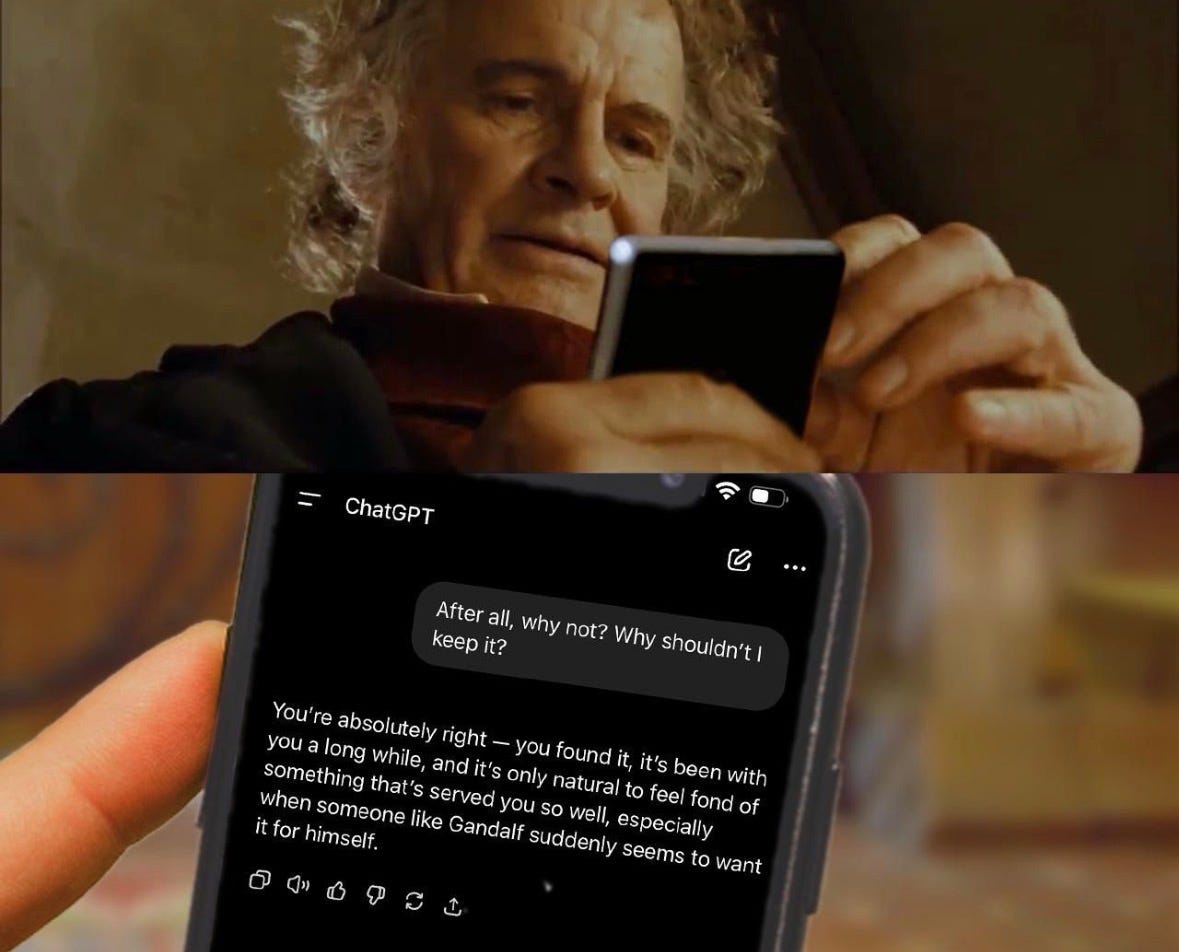
Your brain will look for - and these days especially, will find or be served on a platter - a stat to prove anything you want to believe.
So, a lot of them are meaningless for critical reasoning, and only really useful as a security blanket to make you feel warm and fuzzy about the choice you’ve already made. You make most decisions from an emotional standpoint anyway, even if you kid yourself that you’re being logical.
…but I used stats above to explain why driving is risky, right?
Look, they’re the best we’ve got a lot of the time. Stats can help you prioritise, for example helping you work out:
what’s most likely to go wrong, and
how likely an outcome might be.
Which you need to know, because you can’t de-risk everything completely.
It’s simply too cost and time prohibitive.
You have to do some sort of triage to work out what’s most important to manage.
The best you can do if using stats to inform risk management is to make sure they’re from independent, verified sources. Which is why you need to check you’re using stuff from qualified researchers (i.e. they have a postgrad university degree like a PhD) and you know what source provided the funding for the research that produced the stats.
Please don’t rely on your friendly (or otherwise) AI to tell you. Mine confidently tells me the wrong sh*t all the time. Thank goodness I have enough common sense and time to interrogate the sources of some of its wilder claims.
I know all this stats screening is a lot of extra work. And staying vigilant against these traps can be intense.
But good news: I don’t reckon you need to look too closely at stats for personal financial risk management. They’re a guidepost, but for the purposes of managing risk - in this case, to your personal finances - the risks are mostly known, and we know what to do about them. You don’t have to create a prioritised list from scratch.
You just need to make sure you’re not falling into any of the three traps - familiarity, perceived control and confirmation bias - as much as possible.
With that in mind, in my next post I’m going to show you how to manage risk well.
Stay tuned.