

Retirement fund not so super? Perhaps a switch is in order
Superannuation is compulsory saving for Future You. But what if it's eroding your wealth? You can say farewell to fossil fuels by moving your super.

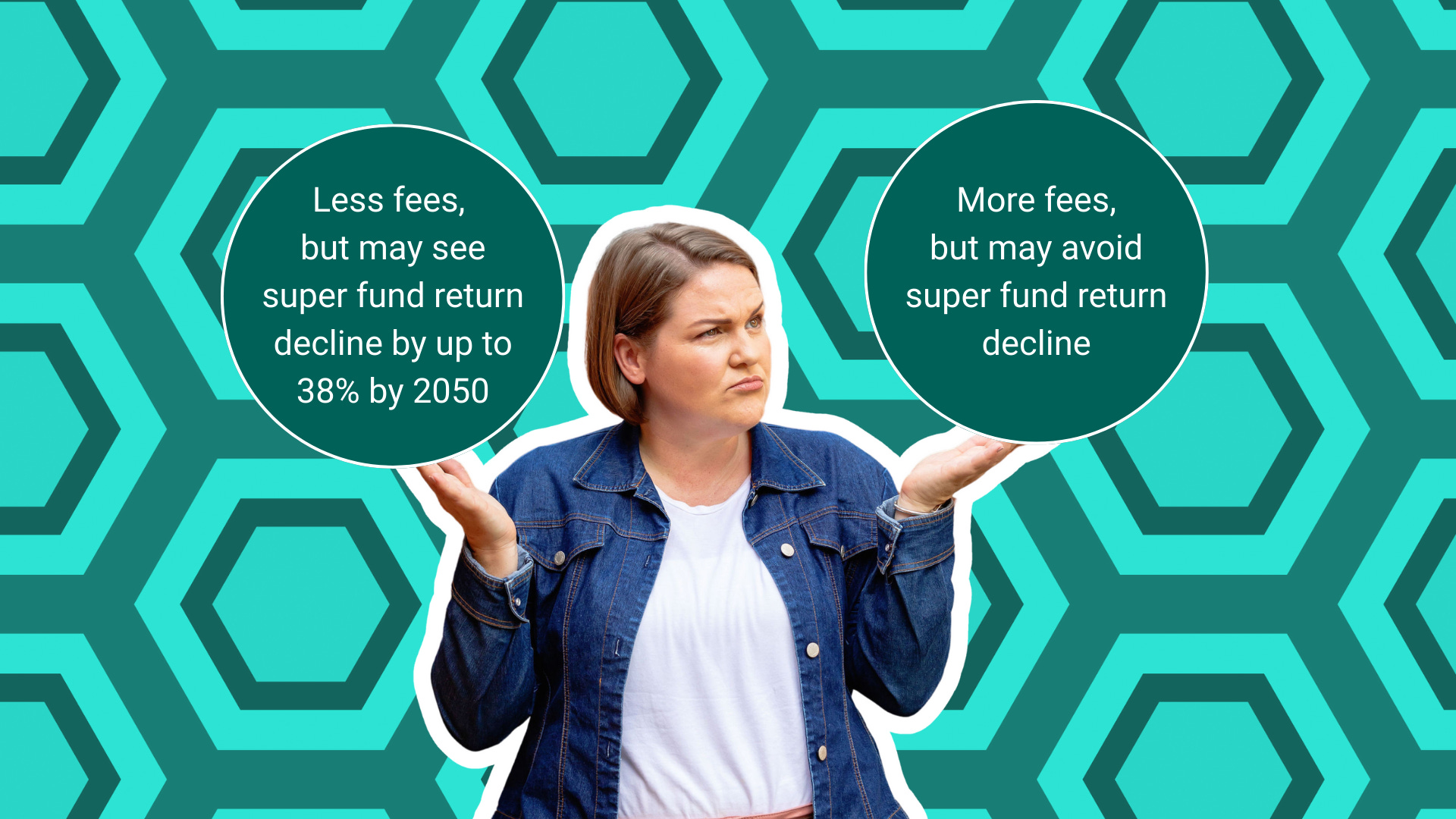
Bummer about your super being connected to fossil fuels 😔
But please don’t despair. You are not alone.
Market Forces just released a brand new report (early Dec 2025) on the Top 30 super funds and found only one had no exposure to what they’re calling the FFX 200 - the Fossil Fuel Expansion Index. That’s the 200 companies doing the most fossil fueling.
They found the average super fund has 5.8% of its assets - your money - in these companies.
That’s an average of $5,300 per member.
If that’s got you itching to move, excellent news: planning for this step is pretty straightforward.
Before we go further, two definitions for clarity:
Your fund is the superannuation entity. For example AustralianSuper, REST, MLC, Hostplus.
Your investment mix is what you’re invested in within the fund. Each fund typically has dozens of options, and they tend to have names like ‘Balanced’ or ‘High Growth’.
Sidenote: In case it’s useful, see Appendix 1 for the team’s desktop audit of holdings for the nine biggest super funds’ MySuper mix at the bottom of this post. Spoiler: they all hold fossil fuel companies.
Now we’ve got that sorted…
Broadly speaking, you generally have two options:
Switch your investment mix within the fund you already have. This is the lowest risk and cost, and easiest to do. But not every fund has this option (Cbus, I’m looking at you 👀) and not every alternative labelled this way is devoid of fossil fuels.
Move to a new fund altogether. This is slightly higher risk due to insurance, may incur cost depending on your current fund’s exit fees and slightly more difficult as you have to set up a new account with a new fund.
To be clear, moving to a new fund takes a mere few minutes these days. I did it this year (2025), so I am speaking from experience.
You set up the new account, check you can transfer your insurance, then initiate the rollover from your current fund.
Done and dusted.
But now, how to choose?
Here are the questions to ask yourself:
Q1. Are you in a defined benefits fund?
Defined benefits schemes are different from the super most of us have, and getting rarer.
They pay a fixed amount to you, for an indefinite period (i.e. as long as you’re alive, I believe).
Shamelessly stealing the technical definition from MoneySmart, a defined benefits fund is:
A super fund where your retirement benefits are calculated by a predetermined formula.
Retirement benefits are usually calculated using your average salary over the last few years before you retire and the number of years you worked in the company or public service.
In general, market fluctuations have limited effect on the value of your benefit, although in periods of prolonged economic downturn, your defined benefits could be affected.
If the fund performance is poor, the trustee will generally ask an employer to help pay member benefits as required.
So, instead of accruing a balance based on your contributions then drawing them down to zero, you just get a share of the pot.
These things are the golden goose, and you do not want to kill them.
Shifting may be too personally costly, in terms of the income you’d give up. Ask your fund what would happen if you moved.
If moving is not feasible, putting pressure on the fund to divest from fossil fuels is definitely possible instead. Start your relentless email/phone calls now!
Q2. Are you in a self managed super fund (SMSF)?
Great news: you are in control of what your fund holds.
If you choose to hold fossil fuel companies, the banks the fund them, or an index fund that holds either or both, that’s on you.
Do an audit of your holdings and decide whether there’s anything you’d like to divest from, getting whatever advice you need to make sure you don’t stuff anything up.
If you are not in defined benefits or an SMSF, onto the final question…
Q3. What’s your priority?
I ask because escaping the fossil fuel companies is fairly straightforward.
Most funds offer an ethical or responsible option which does not hold them, so you can often get away from fossil fuels without the big shift to a new fund, saving time and hassle.
Though be warned - some of the funds labelled this way still hold fossil fuel companies. You have to check the holdings. See Appendix 2 for my findings on the top nine funds in Australia.
But if you also want to avoid banks that fund fossil fuels …spoiler alert: you can’t. Sorry.
(Look, you can definitely come close. But there is no ‘perfect’ fund by this definition).
» Happy with your fund, just not the fossil fuel holdings of your investment mix?
Check if you can switch to a different investment mix with your current fund.
Have a look on your fund’s website and check if they have an investment mix not connected to fossil fuels. They often have names like ‘socially responsible’ or ‘socially conscious’, perhaps even ‘ethical’ or ‘green’. Start with those.
Check they explicitly exclude fossil fuels. To be sure, check the holdings like we did in the Audit post.
While you’re at it, check the fees and performance of both your existing investment mix and the one you'd like to move to.
Fees for self-labelled ethical investment mixes tend to be higher than the standard MySuper options.
Very loosely speaking:
Under 0.8% fees is considered ‘good’ in Australia
Under 0.5% is ‘great’
…but you can get fees as low as 0.02% in the broad options (most of which hold fossil fuel companies.) So even 0.5% fees seem high by comparison.
Which sucks, I know.
I resent having to pay extra to do the ‘right’ thing.
My reasoning: it’s better to pay a little more in fees now to have a chance at keeping the pie big, than skimp on fees and watch my wealth shrink.
After all, 0.47% fees would have to compound up by an awful lot to cover the cost of having to self-insure my home and the loss to both shares and my super fund’s value as GDP shrinks.
One study suggested super fund returns could drop by up to 38% by 2050 if warming carries on its current trajectory.
I do wonder about the impact of fossil fuel companies finding their share price dropping as they become exposed to more litigation risk, and potentially stranded assets.
Perhaps the investments without those exposures will perform as well, or even better, than their fossil-fuel-holding compatriots. They seem to so far, as quoted in the Fossil Fuel Expansion Index report:
Clean energy companies achieved more than double (104%) the investment returns of FFX 200 companies over the seven-year period from November 2018 to November 2025.
But nothing is guaranteed, and my crystal ball isn’t working, so best not to count on it.

» Want to get your super away from banks funding fossil fuels too?
Bad news:
So far, I haven’t found an Australian super fund devoid of fossil fuel companies AND with nothing at all to do with the banks that fund them 😭
If I’ve missed a fund, please comment with the link so other readers know about it too.
If you’re going to mention Australian Ethical, they at least have cash in Big Aussie Banks in all investment mixes except International Shares and Defensive, and I’m not clear if State Street Bank and Trust (which is in those two) is fossil fuel free:
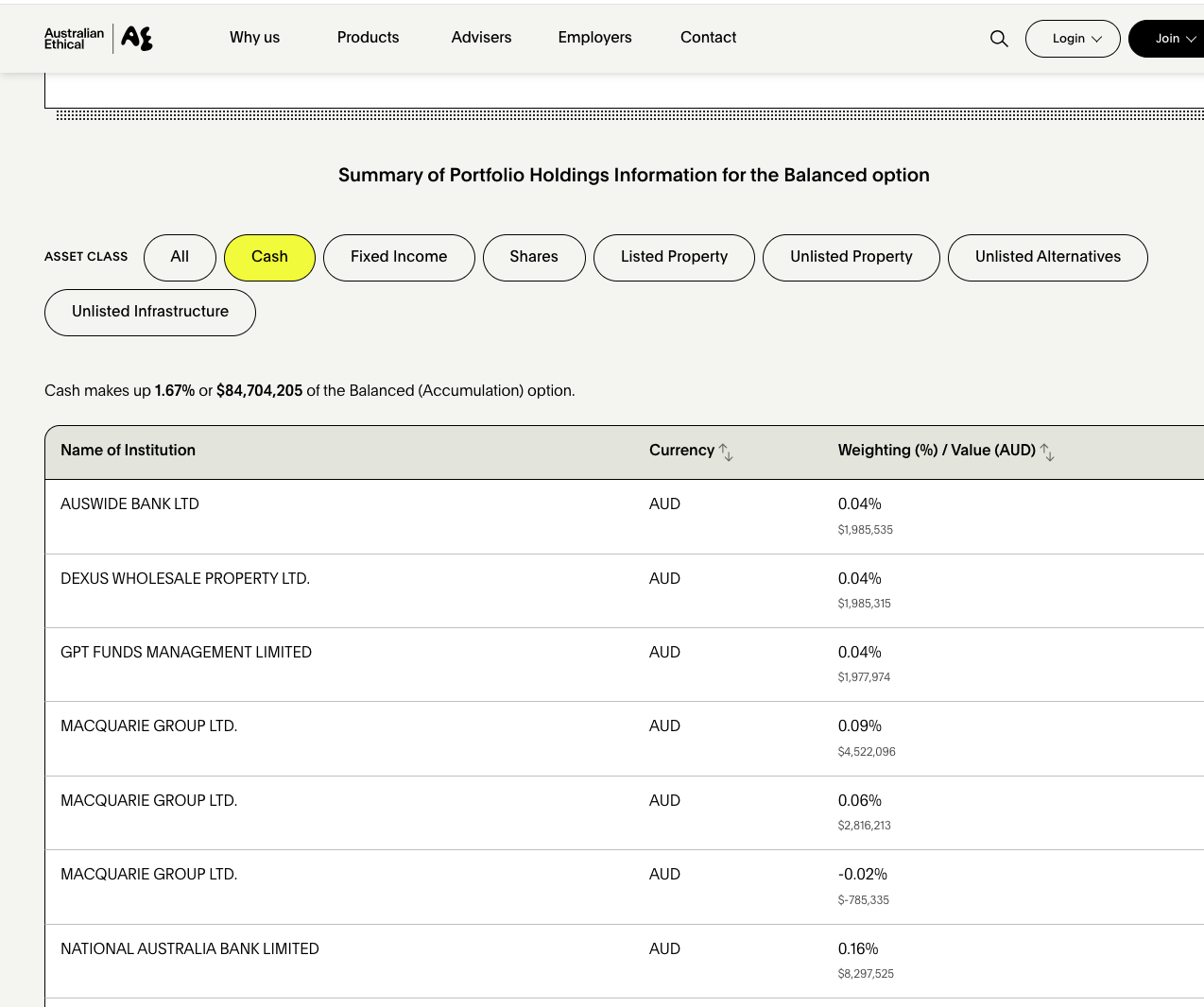
I stopped looking after I found Macquarie and NAB in cash, so they might have connections to banks elsewhere too.
If you’re going to mention Future Super or Verve Super, which are linked as Future Super is the parent fund (hence their holdings are identical):
I found they have a fixed interest product with National Australia Bank, so they aren’t 100% away from the banks funding fossil fuels either sadly. So close though! It’s only ~$132k.
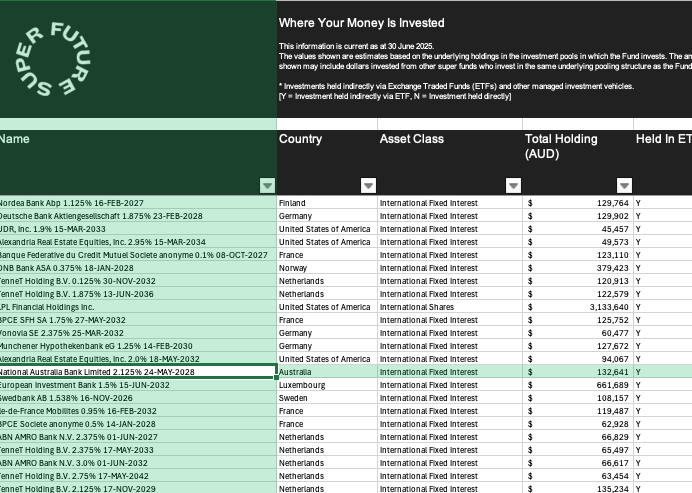
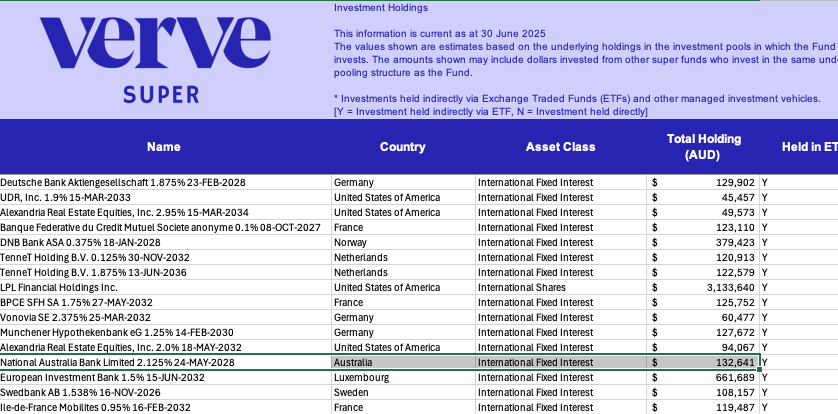
$132k in a fixed interest product is a smidge compared to most other funds I’ve found, so you might decide to move anyway.
If you decide you’d like to switch to an ethical retail fund, please note retail fund fees tend to be higher than industry fund options.
Check what the fees would be according to their product disclosure statements (PDSs). If you’re really keen, you might deem the extra fees worth it.
If you do plan to switch funds entirely, check you’re not going to lose benefits. MoneySmart has a great page on consolidating super, which is similar. Note particularly their points on insurance.
As mentioned above, if you’re in a defined benefits fund, it might be very costly to move in terms of your entitlements.
Likewise, you’ll want to make sure you qualify for comparable insurance, if you are holding insurance with your current fund. If you can’t get comparable insurance with the new fund, it might not be worth moving.
If in doubt, consult a licensed financial adviser for advice, either one within the super fund or separate.
You can check they’re licensed via the MoneySmart page.
You can also see an ethical adviser like those found in the Ethical Advisers’ Co-op (ANZ), and they have access to comprehensive assessment tools like ethosesg.com.
If you’re across the ditch in New Zealand, there’s a great resource called Mindful Money which has looked at all the KiwiSaver funds for you.
Got your potential super change narrowed down?
Awesome!
You’re ready to either send a message to your existing super with a deadline to change their ways – and pop a calendar reminder on that date to move if they haven’t stepped up – or you’re ready to start moving.
Before you move, if you’ve got shares to shift, check out the next Plan post too.
Otherwise, off to Act you go!
Appendix 1: Our desktop audit of MySuper holdings in the big funds
My team downloaded the holdings online for the nine biggest funds in Australia. They were all up to date to end of June, 2025.
(We would have done 10, but UniSuper’s download only works for the Conservative mix at the moment. Weird.)
We looked for the following known Australian fossil fuel producers to see which ones popped up in each holding statement (ASX ticker in brackets):
Oil and gas: Woodside (WDS), Santos (STO), Beach Energy (BPT), Karoon Energy (KAR), Origin Energy (ORG), Ampol (ALD)1, Viva Energy (VEA)
Coal: Whitehaven (WHC), Yancoal (YAL), New Hope (NHC), BHP (BHP)
Note: they could own other Australian fossil fuel companies, or overseas ones, in addition to these. This just seemed like a manageable sample. And if they have any of them, they immediately get a ‘Yes, they hold fossil fuels’ decision based on our criteria so no need to trawl further.
Here’s the findings, but spoiler alert: they all hold fossil fuel producers.
AustralianSuper
Mix: Balanced
Holds fossil fuels: Yes
Specific Australian companies: WDS, STO, ORG, ALD, VEA, WHC, BHP
Australian Retirement Trust
Mix: High Growth
Holds fossil fuels: Yes
Specific Australian companies: WDS, STO, BPT, KAR, ORG, ALD, VEA, BHP
REST
Mix: Rest Growth
Holds fossil fuels: Yes
Specific Australian companies: WDS, STO, BPT, KAR, ORG, ALD, VEA, BHP
Hostplus
Mix: Balanced (MySuper)
Holds fossil fuels: Yes
Specific Australian companies: WDS, STO, BPT, KAR, ORG, ALD, VEA, WHC, YAL, NHC, BHP
Aware Super
Mix: High Growth
Holds fossil fuels: Yes
Specific Australian companies: WDS, STO, BPT, KAR, ORG, ALD, VEA, BHP
HESTA
Mix: Balanced Growth
Holds fossil fuels: Yes
Specific Australian companies: WDS, STO, BPT, KAR, ORG, ALD, VEA, BHP
Mercer Super
Mix: SmartPath [I chose 1979-1983 birth years]
Holds fossil fuels: Yes
Specific Australian companies: WDS, STO, BPT, KAR, ORG, ALD, VEA, WHC, YAL, NHC, BHP
Cbus
Mix: Growth (MySuper)
Holds fossil fuels: Yes
Specific Australian companies: WDS, STO, BPT, KAR, ORG, ALD, VEA, WHC, NHC, BHP
MLC Super Fund
Mix: Growth
Holds fossil fuels: Yes
Specific Australian companies: WDS, STO, BPT, KAR, ORG, ALD, VEA, WHC, YAL, NHC, BHP
Appendix 2: Our desktop audit of ‘sustainable’ holdings in the big funds
My team downloaded the holdings online for the nine biggest funds in Australia. They were all up to date to end of June, 2025.
(Again, we would have done 10, but UniSuper’s download only works for the Conservative mix at the moment. Weird.)
Instead of the MySuper option, we looked for an investment mix description like sustainable, socially consicous, responsible, aware etc. We chose the one most similar to the MySuper (e.g. if MySuper is Balanced, we picked Conscious Balanced).
We looked for the following known Australian fossil fuel producers to see which ones popped up in each holding statement (ASX ticker in brackets):
Oil and gas: Woodside (WDS), Santos (STO), Beach Energy (BPT), Karoon Energy (KAR), Origin Energy (ORG), Ampol (ALD), Viva Energy (VEA)
Coal: Whitehaven (WHC), Yancoal (YAL), New Hope (NHC), BHP (BHP)
Six of these investment mixes funds did not hold the 11 Australian fossil fuel producers we looked for 🥳 Specifically:
Australian Retirement Trust - Socially Conscious Balanced
REST - Sustainable Growth
Hostplus - Socially Responsible Investment Balanced
Aware Super - High Growth Socially Conscious
HESTA - Sustainable Growth
Mercer Super - Sustainable High Growth
But there was bad news:
AustralianSuper’s Socially Aware mix holds oil producer ALD.
MLC Super Fund’s Socially Responsible Growth mix holds four on the list: WDS, STO, VEA and BHP.
Cbus didn’t appear to have a comparable option? At least nothing with a label like the others. Please correct me if I’ve missed, maybe it’s something less obvious.
Nothing’s easy, is it.
Wondering why Ampol’s on the list when they’re associated with distribution rather than production? They’re producers too, operating the Caltex oil refinery in Lytton in QLD apparently. I’ve searched this thoroughly and found this from the horse’s mouth. I am happy to be corrected if I’ve got it wrong, just please send your source!