

Planning a move? Read this first!
If you found fossil fuels in your banking, retirement fund or shares (eww), help to move is on the way. But first: some basics to keep in mind.


Now you know if your money is helping fund fossil fuels and therefore destruction of your own wealth. Makes sense to move it, right?
Before you relocate a single cent, you need a plan.
That’s what you’re gonna create now.
Before we get into the nitty-gritty, some notes:
It’s less difficult than you (probably) think
After the highly cringey moment I realised most of my money was helping fossil fuels, my mind turned quickly to action.
My first thought was ‘Oh no, I abhor having to change banks.’
My memory was of the clunky old days. You know, where you had to front up to a branch with your birth certificate. Good luck even finding a branch within cooee these days!
Banks rely on this perception of difficulty, reasoning you won’t put yourself through so much hassle changing institutions unless things are really bad.
No need to feel that inertia anymore, folks!
The actual moving is quite simple and quick.
Once I’d decided where I wanted my money to go, it took:
Around five minutes to set up a new transaction account at a new bank.
A few minutes to move my super to a new fund and investment mix
A few minutes to put in sell orders for the shares I wanted to offload.
The move itself is quick…
It’s the planning that takes time
Looking at your alternatives, narrowing them down, reading all the necessary documentation… that’s the time-consuming bit.
But, it’s the really, really important bit.
You don’t want to make an avoidable mistake that costs you bit time later, such as:
choosing a financial institution that’s not covered by the Financial Claims Scheme (FCS) - which means you wouldn’t benefit from the government’s $250k guarantee if that bank collapses.
not transferring your insurance to your new super fund - which means you might forfeit essential cover like life, total permanent disability (TPD) or income protection insurance.
unwittingly giving yourself a poorly timed tax bill - for example, if you sell a bunch of shares for a profit and need to pay capital gains tax.
Let’s avoid those potential calamities by considering all our options, and getting any and all professional advice you feel you need to proceed.
More on that towards the end of this article.
What you’re trying to achieve
The ideal outcome of moving one’s money is these big organisations – the banks, retirement funds, index funds and fossil fuel producers – change.
Specifically:
banks stop lending to fossil fuel projects.
super funds and index funds divest from owning shares in fossil fuel projects, and possibly even the banks funding them.
This in turn forces fossil fuel companies to radically change or go the way of dinosaurs, with investment dollars flowing to more sustainable options.
So, you can make a point of asking your financial institution to change first, giving them a deadline to change by, then only move if they don’t change.
Be warned: you’ll send the request. They’ll send you back some excellent marketing materials about their commitment to meaningful change, Net Zero and/or the Paris Agreement.
Ignore this fluff.
You just want the numbers, remember? Words mean zip.
The second-best option is you sleep better by moving your money, if they refuse to change their ways.
But you don’t want them to call your bluff without having your moved mapped out, so best to plan where you’d go if they don’t come to the big-pie party.
Ideally, you’ll actually make your money situation less risky by doing this. Less exposure to lower performing, possibly stranded assets is a good thing for your money.
Even better if there’s little to no cost apart from time. Which, again, is spent once. You do it, then you move on. No daily habits needed to sustain it. My favourite.
Help for choosing alternatives
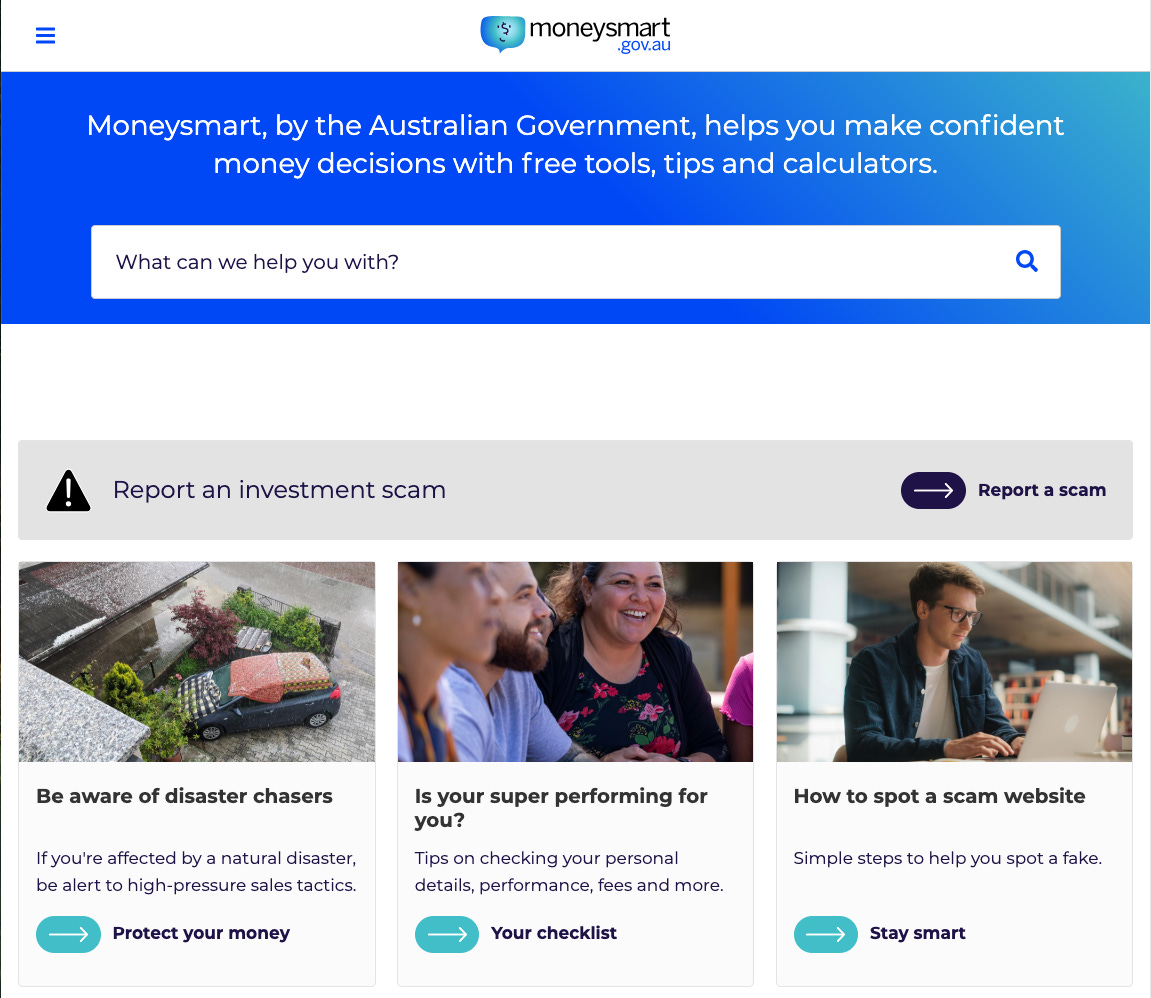
When deciding where you’d like to move, I suggest consulting the MoneySmart website.
It’s government backed, so it’s independent, unbiased information. Translation: they’re not trying to sell you anything.
They have great summary pages on all sorts – like, what to look for in a savings account or mortgage when you’re choosing.
They don’t suggest specific brands, but they give you the things to check when you’re choosing between Brand A and B.
Please use their pages liberally.
I’ll reference specific ones throughout the following Plan post.
Getting advice
Financial advice is a licensed profession in Australia, and licensing is essential for giving specific advice to customers.
We provide educational information only on this site, and our parent site Money School.
We are not licensed advisers and will not seek advice licensing, to help make the demarcation between education and advice clear.
This means you can be confident we will never try to sell you a financial product.
Our independence means we do not recommend specific financial institutions like banks, super funds or index funds. You should seek advice from a qualified professional before implementing anything you learn on this site.
You have many options for getting 1:1 support with your money:
Financial counsellors are free and available to all Australians. You can speak to one on the phone via National Debt Helpline, or arrange an appointment with a counsellor in your area.
Centrelink’s Financial Information Service offers training and 1:1 support via their officers.
Money coaches do not give financial advice (at least, they shouldn’t unless also currently licensed to do so) but can help you make behavioural finance decisions especially, often through 1:1 or group coaching. There is no Australian centric education or qualification process to become a money coach.
Financial advisers have to be licensed under ASIC’s Australian Financial Services (AFS) licensing scheme. MoneySmart’s financial advisers page offers pointers for finding an adviser, as well as links to registers of professionals.
You can find an ethical adviser via the Ethical Advisers’ Co-op (ANZ). Please cross-check their registration on MoneySmart’s page.
Accountants may also be of use, especially if your questions relate to tax. MoneySmart’s accountants page offers tips on what accountants can do and how to find one.
Superannuation funds are able to give general financial advice to their members. You may be able to consult with an adviser within your fund, paying for the session from your superannuation balance.
Now we’ve got the general stuff underway, it’s time to make a plan for your bank account/s. Onto the next post…