

Did Millennials and Gen Z dodge a bullet?
Perhaps not being able to afford a mortgage was the silver lining on the storm cloud of Australia's appalling housing affordability.

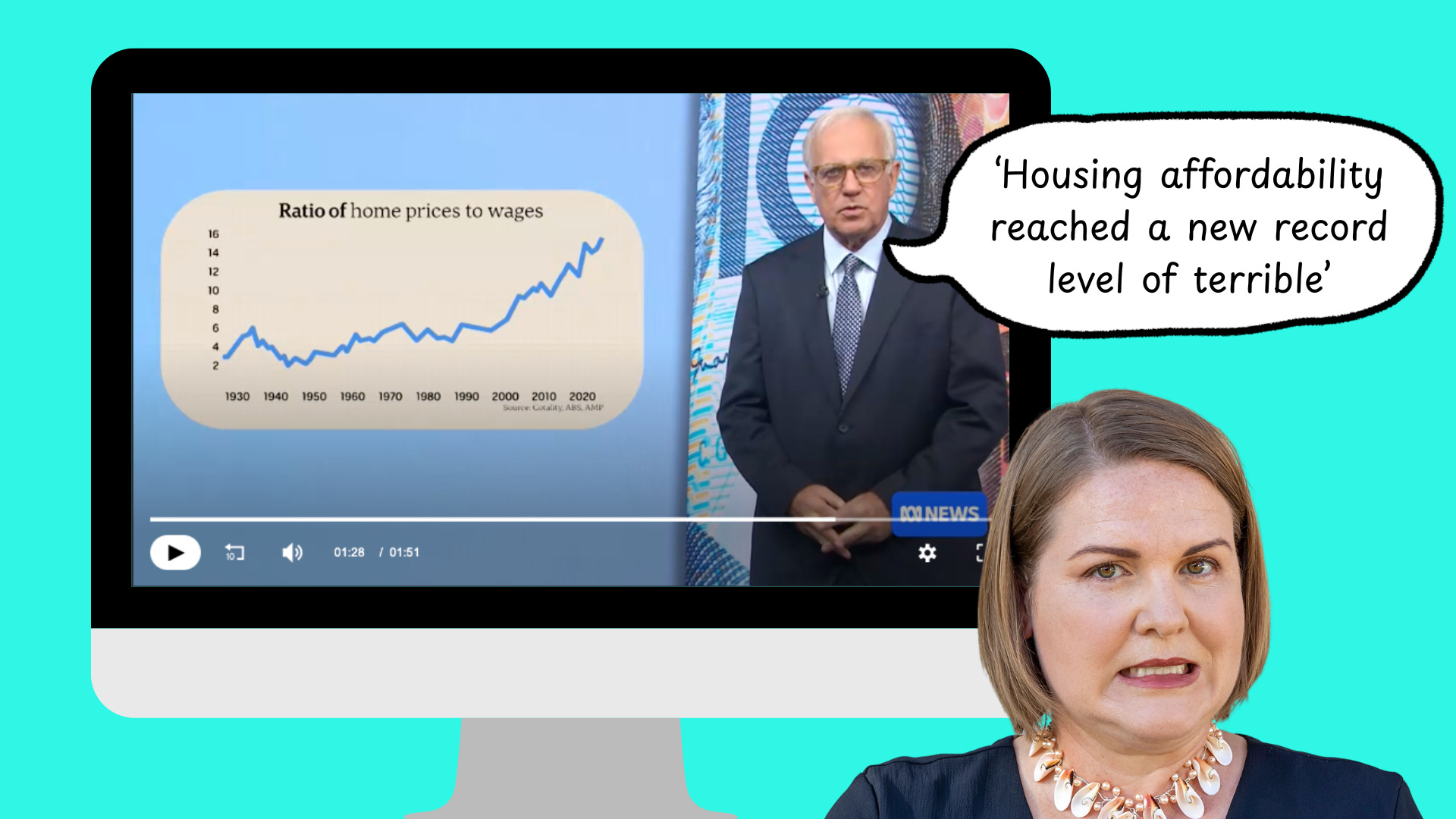
‘Housing affordability reached a new record level of terrible’ according to Alan Kohler on last night’s Finance Report for the ABC.
A house in one of Australia’s capital cities costs around 14 times the average annual wage now. As Kohler said, that’s three times the ratio when our Prime Minister was born in 1963.
While I can appreciate a 17% mortgage was absolutely terrifying in the late 1980s, the data is clear: it’s harder to own a home now. Much harder. Sorry to anyone who thinks otherwise, but it’s not the much maligned avocado toast to blame.
To the (mostly younger) folks who’ve struggled to buy a home, I have a consolation prize for you:
You may have dodged a bullet.
Specifically, a home at high risk of becoming uninsurable.
I say this because Australian homeowners today have to ask themselves:
“Should I stay or should I go?”
Cue The Clash singing in your head (you’re welcome).
If you’re unlucky enough to find yourself with the one in 10 houses predicted to become uninsurable in *checks calendar and gulps* nine years, you’re faced with a tough choice:
Option 1: Stay where you are
This means:
putting aside enough cash (we’re talking hundreds of thousands of dollars here) to self-insure so you can repair or rebuild post disaster,
spending money now to retrofit your home so it’s better prepared for disaster, and
living with the stress of wondering if your home will be damaged beyond your means to fix it every time you get an emergency warning on your phone.
Not a recipe for sound sleep.
But, it’s an option some will feel they have to take. Especially if their home value drops below the remaining debt, as to sell would mean still owing money while trying to find a new place to live in what’s likely to be a competitive market for owners and renters alike.
Which is why homeowners might be considering Option 2 now, before the ‘we can’t insure you anymore’ letter arrives:
Option 2: Move
This means working out where would you want to move to, then moving. As anyone who’s moved will tell you, that’s not exactly a low-stress exercise in itself.
The stress piles on when you realise that alongside school zones, public transport and local planning constraints, you now also need to account for:
what the likely risk profile of your new home might be - ideally, you’ll be looking for something at lower risk of disaster impacts than you currently have, and
whether your new location (city or town) is vulnerable to the impacts of global water bankruptcy, which was declared in January 2026.
This is why I say perhaps those who missed out on buying a home may have dodged a bullet.
These is a very expensive question.
Getting the answer wrong risks jeopardising one of the fundamental basics of human security: a safe roof over your head. And because home ownership usually involves debt, at least for the first decade or two, it can lead to bankruptcy if it all goes pear-shaped.
Of course, some people see this disruption as a bonus.
Last year I was explaining the uninsurability risk to a friend who was thinking about buying rural land and living on it in a tiny (portable) home.
I was trying to explain why buying land in a fire risk area might not be ideal.
Her response was: maybe that means we can bargain the price down.
…not the angle I was going for. I was hoping she’d realise the concept of uninsurable property sucked and we should try to stop it from happening (still my preferred go-to response).
Aside from being opportunistic like my friend, what might you look at if you’re considering a move?
For starters, I’d suggest:
how you assess the climate risk of a home,
how you can prepare whatever home you chooe for potential disasters,
what relief might be offered by the government if you decide to stay and get caught out by uninsurability, and
whether it’s better to rent instead of own in this environment.
In the interest of keeping these blogs digestible, I’m in the process of exploring those dot points separately in their own posts.
Standby for those.
In the meantime, please let me know if any other questions are popping to mind after reading this - I’ll try to answer those too.