

Before the rabbit hole: some context
You might thinking: "Who the heck is Lacey Filipich to be telling me climate change is coming to make me future poor?" ...in which case, read this post.

I mentioned the wealth wrecking ball that is climate change and its potential decimating effect on your money in my first post.
The next series of posts will help explain what led me to this conclusion.
But before we get into that, here’s some context so you know where I’m coming from.
First things first:
Don’t panic!
I am quoting the immortal words of Douglas Adams in Hitchhiker’s Guide to the Galaxy, but I really, really do mean them.
Panicking does no good.
It just makes you more likely to make a mistake.
You have time to digest and react in a sensible, measured manner, seeking any and all professional or informal advice you feel you need.
To be clear: you don’t have years.
You have a few months, I’d say. But that’s plenty of time to be organised, methodical and confident about your choices.
Now about me, Lacey Filipich:
I’ve worked in fossil fuels on-and-off for over two decades
I studied chemical engineering from 2000 to 2003 at the University of Queensland (UQ) in Brisbane.
While there, I co-founded Skirts in Engineering (now known as UQ Skirts) in my third year and was President of the Chemical and Environmental Engineering Student Society (ChESS) in my final year.
Incidentally, Warren Hogarth - co-founder and CEO of finance app Tilt - was the President of ChESS the year before me. Must be something in the water at UQ, huh?
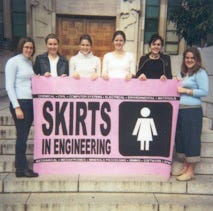
I graduated as valedictorian, then in early 2004 I moved to Australia’s red light district (Kalgoorlie) to begin my career in mining. Kal was another kind of education altogether. Ask me about the local tourist attraction, Langtrees (a brothel - no, I’m not kidding) sometime.
It really was the wild west as far as I was concerned.
Along with several years as an employee for Western Mining Corporation (WMC) and BHP in the nickel industry, my work history includes:
2002, 3mo: Engineering vac student at bp’s Bulwer Island oil refinery in Brisbane.
2011, 6mo: Operational improvement (OI) consultant at BHP’s coal mine on the Navajo Nation in New Mexico.
2018, 3mo: OI consultant to South32, including their Illawarra coal mining division.
2020, 9mo: OI consultant to Adani’s coal mining Carmichael Rail project.
2021 - 2023: Taught design thinking and systems thinking to (oil and gas company) Woodside’s mid-tier managers as adjunct faculty for the Australian Graduate School of Management (AGSM).
Fair to say, I’m familiar with the fossil fuels industry and resources more broadly.
I have not written off working in fossil fuels again. Having taken this stance publicly, I may not be invited back anyway 😆
Regardless: I believe there are brilliant people working in fossil fuels.
I reckon they’re being shielded by their employers, because employers are compelled to shield them. At least they have been until recently. More on the issues with company law and its many unintended consequences in a later post.
I’m well versed in risk management
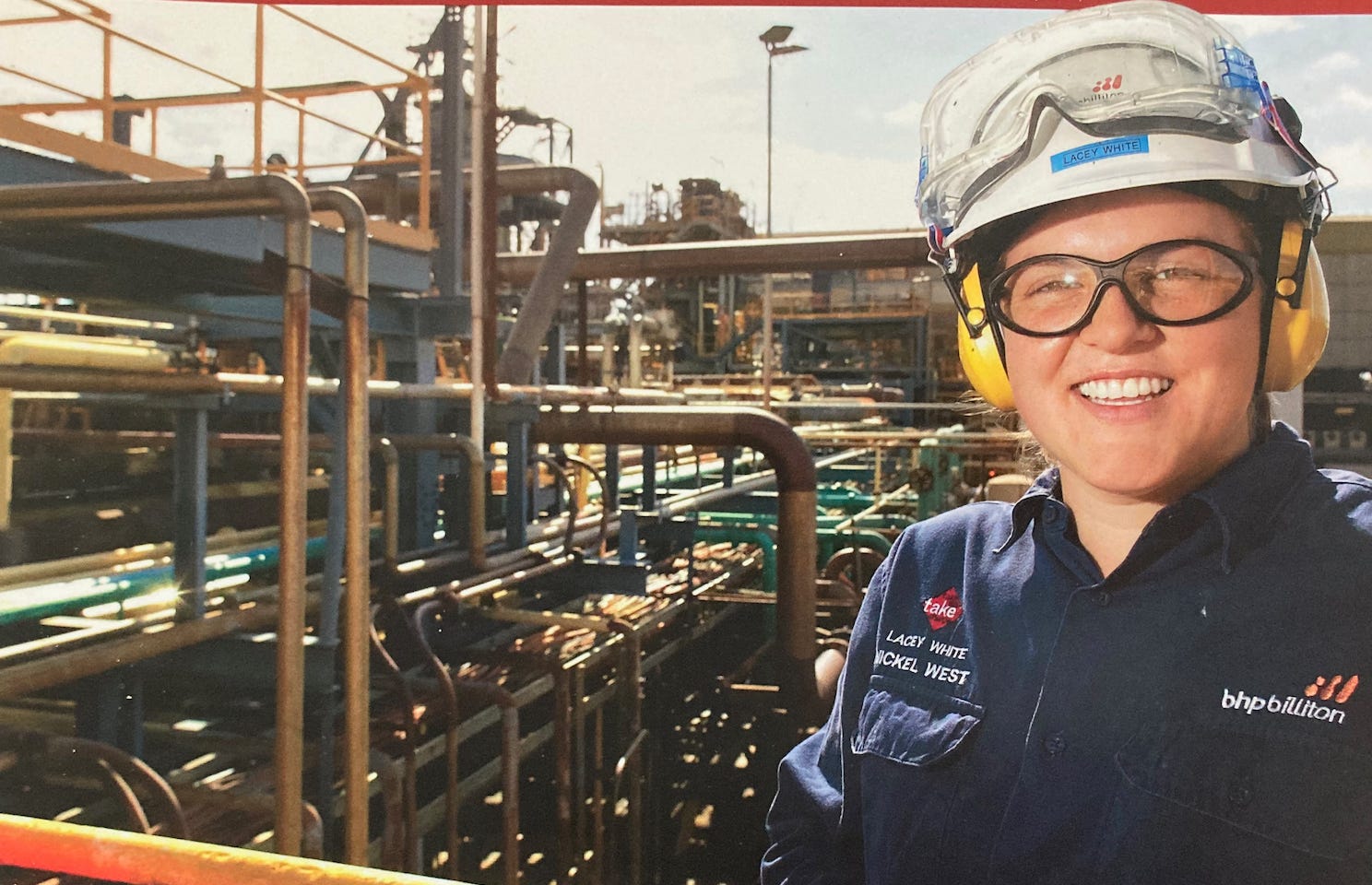
I was 22 years old when I first left in charge of a processing plant in the legal and operational sense. As in, if someone was seriously injured or died, it was my arse on the line for duty of care.
That plant - a nickel smelter - had more ways to kill you than you have fingers and toes, including 1,300+ degC molten metal and (nearly) pure sulphuric acid.
I’m a trained facilitator and practitioner of risk management techniques like:
Hazard and Operability Study (HAZOP)
Process Hazard Analysis (PHA)
Workplace Risk Assessment and Control (WRAC)
Failure Modes and Effects Analysis (FMEA)
Root Cause Analysis (RCA)
If that’s gobbledygook to you, suffice to say: managing risk is my bread and butter. It underpins everything I do.
I say this with love: the finance industry is …suboptimal… when it comes to protecting people from harm.
Bluntly, most finance industry professionals would fail Risk Management 101 in a situation where death was an imminent threat. They don’t get the hierarchy of control. If they do get it, they refuse to use it.
It’s baffling but deeply embedded in the industry’s culture, though I occasionally see promising progress.
This lack of risk management understanding explains the Royal Commission into Misconduct in the Banking, Superannuation and Financial Services Industry findings and ongoing harm the banks and our government in particular keep causing.
I digress, back to the next point…
I’m a financial educator
…which is a self-appointed title in Australia.
I operate under the Australian Securities and Investments Commission (ASIC)’s ‘balanced, fair and factual’ rule for financial information as distinct from advice. This means I don’t need a financial advice license to deliver Money School’s financial education.
Financial advice licensing doesn’t cover the full spectrum of what I’d consider a comprehensive financial education and it can introduce potential conflicts.
I prefer to stick to the balanced, fair and factual rule.
I take this seriously. I have been very careful to ensure I am looking at this from all sides before being more public on this topic. I feel I’ve done enough now to satisfy that rule.
I’m willing to stake the reputation I’ve built over 15 years as trusted financial educator on what I’ll share on this blog.
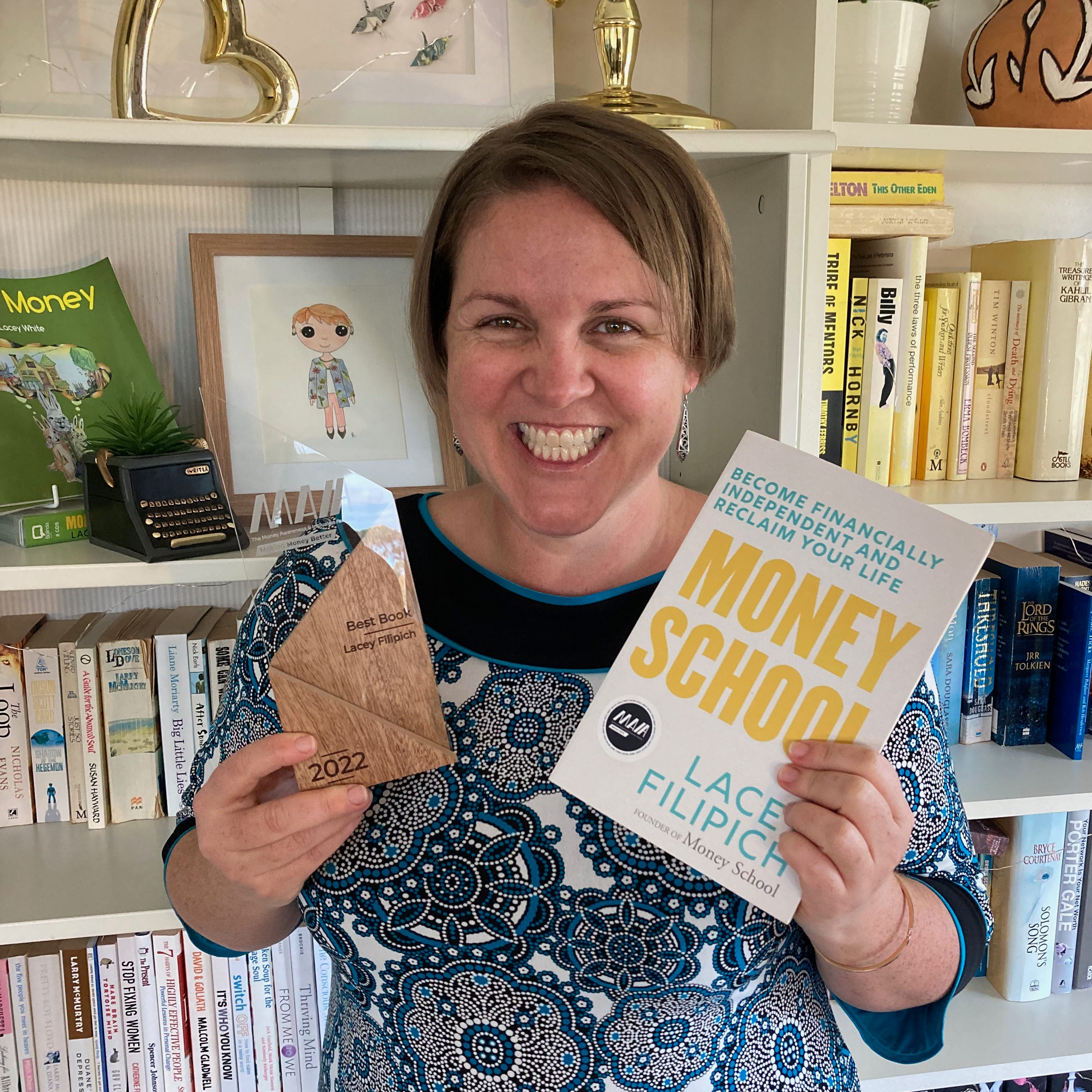
One thing my readers, followers and clients tell me they love about my content is my willingness to share my (copious) mistakes as learning experiences for all.
I’ll be doing a lot of that in this Substack 😁
And finally…
I like money
I don’t consider myself a communist, socialist, or anything really.
I like the idea of universal basic income, in part because I reckon I’ll end up paying less tax eventually (I like the fairness bit too.)
It seems obvious that capitalism without guardrails to protect finite resources is ruinous. I’m not sure the way we’re implementing modern monetary theory (MMT) is entirely satisfactory as I don’t see how infinite debt or money printing doesn’t implode eventually.
But I’m not yet convinced we have to blow up capitalism completely to move forward if we act boldly now.
If we don’t act boldly, we may not have a choice.
It’ll be blown up for us.
…or maybe I’d just really like it if we didn’t have to upend everything, so I’m looking for ways to avoid wholesale revolution 😬
Okay, I reckon that’s enough about me to be getting on with. If you need more, please watch my TEDx talk for more, and check more of my content out on LinkedIn, where I’m a Top Voice in Finance.
In the next post, we’ll be back to the problem and why I think it’s one: